Book Your Free Strategic Session – Immigration 360° 30 minutes to transform your immigration or reintegration journey. ✅ Profile Review – ✅ Custom Roadmap – ✅ Expert Insights 📅 Book now at 👉 https://zcal.co/kounga 🎯 Choose Google Meet or WhatsApp +1 832 997 6205 Act now – limited slots available !
How nighttime scrolling steals our children’s rest—and how families and communities can help them reclaim it.
The Small Star Under the Blanket
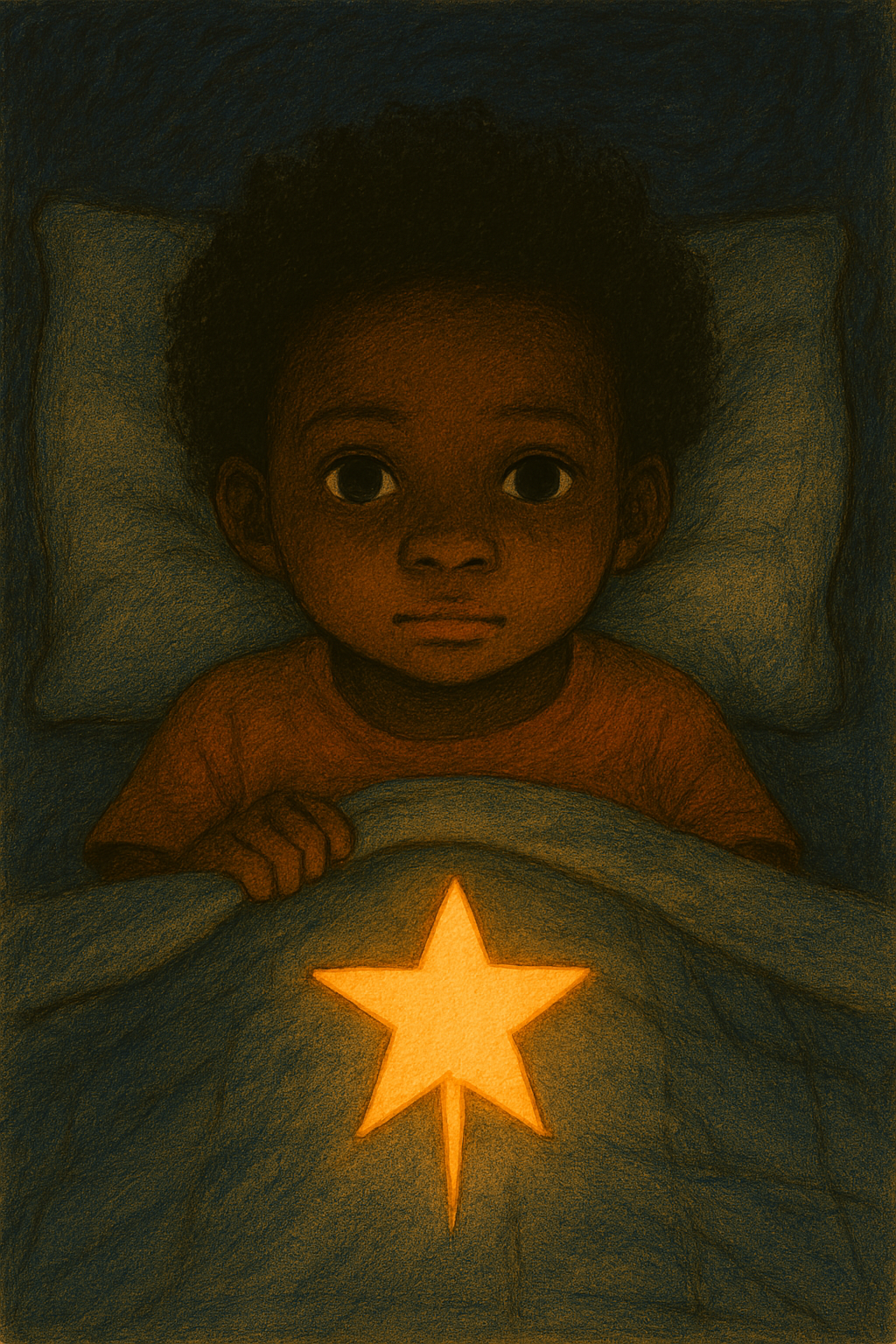
In the dark, the phone glowed like a small star under the blanket.
It was nearly midnight in a modest home on the edge of Douala. The house had quieted: parents asleep, the dog curled by the gate, the hum of a generator slowing to silence. But in one back room, a faint blue-white light flickered. Under the covers, 15-year-old Daniel scrolled.
His thumbs moved in quick bursts, double-tapping pictures on Instagram, swiping to the next TikTok clip, scrolling through threads on X. A notification flashed: his classmate had posted a late-night selfie on Facebook. He laughed softly, careful not to wake his younger brother on the mattress nearby.
“One more video,” he whispered. He said it again at 12:10. At 12:40. At 1:05. Each scroll promised a quick dopamine spark, each swipe pushed sleep further away. The blue light, bright as a lantern in the cave of his blanket, told his brain it was still daytime. His eyelids felt heavy, yet his mind buzzed with the fear of missing out.
Outside, the city exhaled into deeper night. Inside, Daniel rode the endless loop of the midnight scroll.
Act I — Night Shift
Daniel is a composite of many teenagers today. Ask any parent in Yaoundé, Nairobi, Lagos, or Cape Town: the bedtime ritual often includes a device hidden beneath the pillow.
What makes this loop so hard to escape ?
First, the algorithms. Social platforms are designed to drip-feed endless novelty, each video or post crafted to keep attention just a little longer. TikTok’s “For You” page never ends. Instagram reels flow one after another. Notifications from WhatsApp or Facebook Messenger interrupt just as sleep begins to pull.
Second, the blue light. Scientists explain it simply : our eyes have cells that respond to blue wavelengths. At night, blue light from screens tells the brain, stay awake. It suppresses melatonin—the hormone that signals it’s time to sleep. Even 30 minutes of late-night scrolling can push back sleep by an hour or more.
Third, the social pressure. Teens crave belonging. If the group chat is alive at 11:30, who wants to be the one who logs off? Fear of missing out becomes fear of being left out.
And so Daniel’s “night shift” begins. Midnight turns to 1:00. The body begs for rest, but the mind stays wired. What accumulates is not just fatigue, but sleep debt—the brain’s unpaid bill. And like money debt, it compounds with interest.
Act II — The Fallout
Morning comes early. The rooster crows at 6:00. Daniel’s mother nudges him awake for school. His eyes are glassy, his body heavy.
By the time he slides into his classroom, the fog has settled in.
The teacher writes an equation on the board. Daniel copies it slowly, letters sliding into one another. A classmate pokes him, “Hey, wake up.” He forces a smile. Minutes later, his head dips again.
At 10 a.m., the coach on the school field calls out, “Daniel, move your feet!” His reaction is half a beat late; the ball slips past him. The coach frowns: “You’re sharper than this. What’s wrong?”
In a nearby vocational training site, another teen—a trainee electrician—nods off as he monitors equipment. His supervisor catches him drifting. “Son, this is dangerous. You could hurt yourself or someone else.” The trainee rubs his eyes, embarrassed.
Back at home that evening, Daniel’s mother notices his irritability. He snaps at his younger brother, then slumps at the dinner table. She whispers to her husband, “He’s not himself these days. Always tired, always moody.”
Sleep loss doesn’t just blur the morning. It steals focus, alters mood, slows reflexes, and chips away at learning. A child’s brain, designed to recharge with eight to ten hours of nightly rest, limps along on half rations.
“It’s not that our children are lazy. It’s that they’re exhausted.”
Act III — The Turn
The moment of change begins at the kitchen table.
Daniel’s mother sits with him after dinner. The phone rests between them. She doesn’t scold. She says softly, “I know it’s hard to stop. I see how tired you are. Let’s figure this out together.”
They draft a family tech agreement on a sheet of paper :
Family Tech Agreement (excerpt) :
No phones in bedrooms after 9:30 p.m.
All devices charge overnight in the living room.
Exceptions only for homework, with parents aware.
Consequences: loss of weekend data if rules are broken.
Rewards: family movie night when the plan is kept.
It feels strange at first, but Daniel nods. He’s tired of being tired.
Later that week, a nurse visits their school to give a talk. She is calm, not alarmist.
“Phones connect us. They are not the enemy,” she tells the students. “But your brain needs sleep as much as your body needs food. Every hour of missed sleep is like skipping a meal. At first you think you’re fine, but slowly you run empty.”
Her advice is practical: – Dim screens an hour before bed. – Use Do Not Disturb after 10 p.m. – Let morning sunlight hit your eyes to reset your body clock.
Daniel listens. For the first time, he feels the possibility of balance—not giving up his phone, but learning to put it down when night calls.
Act IV — A Wider Lens
This story is not just about one boy. It’s about a culture of midnight scrolling.
African families face unique pressures. Many parents work long hours; for some, the phone feels like a safe companion for children. For youth, digital life is often the only way to connect with peers and the wider world. Phones provide joy, creativity, and opportunity.
But if we want our young people to thrive in school, at work, and in life, we cannot afford to sacrifice sleep.
Teachers can adjust homework deadlines so students don’t feel forced online late at night. Coaches can check in when performance dips. Employers of trainees can remind youth that alertness is part of safety. Civil society groups can run campaigns to normalize device-free nights.
And at home, parents can model what they ask: leaving their own phones to charge outside the bedroom.
“Our children will not do what we say. They will do what we do.”
Finale — Call to Action
It begins with one step tonight. Put the phones to charge outside the bedrooms.
By doing so, you gift your child the chance to rest, to grow, to dream. Childhood is too short to spend in a midnight scroll.
What Parents and Caregivers Can Do Tonight
Charge phones outside bedrooms; set a central charging station.
Establish consistent wind-down and lights-out times.
Use Do Not Disturb / Focus modes and parental controls after an agreed hour.
Create a family tech agreement (bedroom-free devices, clear exceptions, fair consequences).
Model the behavior as adults: keep your phone out of your bedroom, too.
Partner with schools, coaches, and youth programs to align expectations.